Source Luxury Faux Fur Jacquard Blanket for Home, Auto, and Travel
Explore 30 options for luxury faux fur jacquard blanket products suitable for home textiles, automotive upholstery, and travel use. Compare materials like acrylic and polyester, check specifications such as weight and width, and review customization options for your sourcing needs.
Key considerations
Products List




Comprehensive Sourcing Guide
Luxury Faux Fur Jacquard Blanket Sourcing Guide
Procuring luxury faux fur jacquard blankets requires distinguishing between high-end decorative textiles and functional thermal wearables. The observed market data indicates a diverse range of materials, including 100% acrylic, 100% polyester, and blended options, which directly influence the tactile quality and durability of the final product. Buyers must verify whether the specific listing targets the garment, home textile, or automotive upholstery sectors, as the fiber composition and knitting techniques vary significantly across these applications.
The sourcing landscape reveals distinct product models with varying specifications, such as the 8AFT181 and JA-0004 series, which often feature different weight standards ranging from 700g/m to 1100g/m. Understanding these technical variances is critical for aligning procurement with specific project needs, whether the goal is a lightweight travel accessory or a heavy-duty winter blanket. Buyers should carefully cross-reference the listed fiber types, such as short fiber or plush, against the intended usage to ensure the selected material meets the required aesthetic and performance benchmarks.
Product Scope and Observed Listing Signals
The available inventory demonstrates a clear segmentation between plain color designs and intricate jacquard patterns, with some listings explicitly noting printed variations. This distinction is vital for buyers seeking specific visual aesthetics, as the knitting technics, including warp knitting and stitch knitting, determine the texture and drape of the fabric. Observations show that while some products are designed for general home textile use, others are specialized for applications like auto upholstery or toy manufacturing, necessitating a precise match between the product description and the end-use environment.
Commercial signals in the listings highlight a wide price range from 1.2 to 60 USD, reflecting differences in material quality, production complexity, and order volume. The minimum order quantities observed span from 50 to 2000 units, indicating that suppliers cater to both small-batch customizers and large-scale distributors. Buyers must evaluate whether the listed customization options, such as specific packing methods like rolls or cartons, align with their logistical requirements and whether the observed width specifications, such as 58/60 inches, fit their cutting and manufacturing processes.
Technical Specifications to Verify
Verification of physical features is paramount, particularly regarding high strength and shrink-resistance, which are critical for maintaining the integrity of luxury faux fur over time. The data indicates that specific models possess heat-insulation properties, making them suitable for winter or cold-weather applications, while others are marketed for spring and autumn use. Buyers should confirm the exact knitting method, whether machine weaved or stitch knitting, as this impacts the fabric's density and its ability to retain the plush texture without excessive pilling or wear.
Dimensional and weight specifications vary significantly across the product range, with standards ranging from 700m/g to 1100g/m and specific size configurations like 130x160cm or Full size. It is essential to validate the fiber type, distinguishing between short fiber, plush, and blended chemical fibers, as these attributes dictate the softness and thermal performance of the blanket. Additionally, checking the product model numbers against the stated standards ensures that the ordered item matches the intended weight and density, preventing discrepancies in the final delivered goods.
Compliance and Safety Documentation
While the provided data does not explicitly confirm specific certification statuses, buyers must prioritize safety documentation for products intended for children or sensitive environments like hospitals and hotels. The presence of features such as anti-pilling and portability suggests a focus on durability and user experience, but these attributes do not replace the need for formal safety testing. Procurement teams should request evidence of compliance with relevant textile safety standards, particularly for items labeled for use in travel, military, or medical settings where hygiene and material safety are non-negotiable.
Documentation requirements should extend to verifying the origin of the materials, as the listings indicate production primarily in China. Buyers need to ensure that the supply chain adheres to international labor and environmental standards, even if specific certifications like OEKO-TEX are not explicitly listed in the initial product data. Establishing a clear protocol for requesting test reports on flammability, chemical content, and fiber composition is essential to mitigate risks associated with importing textile goods for commercial resale or institutional use.
Cost Drivers and Commercial Terms
The cost structure for luxury faux fur jacquard blankets is heavily influenced by the material composition, with 100% acrylic and polyester options presenting different price points compared to blended alternatives. The observed MOQ range of 50 to 2000 units suggests that unit costs will fluctuate based on order volume, requiring buyers to calculate the total landed cost rather than focusing solely on the per-unit price. Understanding the relationship between the product standard, such as 850G/M or 900G/M, and the final price is crucial for budgeting, as higher weight standards often correlate with increased material usage and production time.
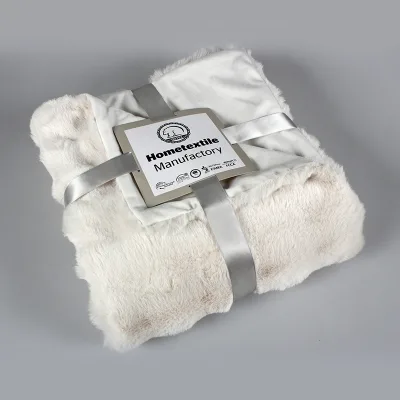
Commercial terms regarding packing and shipping are equally significant, with options ranging from individual rolls to cartons packed in containers for sea freight. Buyers must clarify whether the listed price includes the cost of specialized packaging, such as insert cards and crossribbons, which may be required for retail presentation. Additionally, the lead times and logistics arrangements should be confirmed early, as the variability in product models and customization availability can impact the overall timeline from order placement to final delivery.
Supplier Qualification and Quality Control
Supplier qualification should focus on their ability to consistently deliver the specific technical attributes observed in the listings, such as the precise knitting technics and fiber types. Given the diversity of applications from garment lining to auto upholstery, suppliers must demonstrate expertise in managing different production lines to ensure that the high-strength and heat-insulation features are maintained across all batches. Buyers should request samples that match the exact model numbers and standards to verify that the physical features, such as the plain or jacquard patterns, meet the expected quality thresholds before committing to larger orders.
Quality control protocols must address the variability in product standards, ensuring that the weight and density specifications are met consistently. Since the data shows a range of standards from 700m/g to 1100g/m, it is imperative to establish clear acceptance criteria for weight tolerance and dimensional accuracy. Implementing a rigorous inspection process that checks for defects like pilling, uneven dyeing, or structural weaknesses in the knit will help maintain the luxury status of the product and prevent returns or customer dissatisfaction in the final market.
Long-Term Procurement Checks
Sustaining a successful procurement relationship requires ongoing monitoring of supplier performance against the initial technical specifications and commercial terms. Buyers should regularly audit the consistency of material quality, ensuring that the 100% acrylic or polyester compositions remain stable and that the customization options continue to meet evolving design requirements. Establishing a feedback loop for product performance in the field, particularly for items used in high-wear environments like automotive upholstery or travel, will provide valuable data for future sourcing decisions.
Long-term checks should also include a review of the supplier's ability to adapt to changing market demands, such as shifts in seasonal preferences or new safety regulations. As the product range includes items for various age groups and seasons, from winter blankets to spring and autumn accessories, suppliers must demonstrate flexibility in their production capabilities. Maintaining a strategic partnership with suppliers who can reliably deliver on the observed standards and specifications will ensure a steady supply of high-quality luxury faux fur jacquard blankets for the buyer's portfolio.
FAQs
What materials are used in luxury faux fur jacquard blankets?
These blankets are crafted from 100% acrylic, 100% polyester, or blended polyester and acrylic fabrics. The materials are selected for their plush texture and durability, ensuring a soft hand feel suitable for home textiles and garment applications. This composition supports heat insulation and shrink resistance for long-term use.
Can luxury faux fur jacquard blankets be customized for specific projects?
Yes, customization is available for these products. Buyers can request specific patterns, including jacquard and plain color options, to match their design requirements. The fabric supports various applications such as auto upholstery, bags, and shoes, allowing for tailored solutions that align with specific brand aesthetics and functional needs.
What are the standard specifications for these jacquard blankets?
Standard specifications include widths of 58/60 inches and model numbers like 8AFT181 or JA-0004. Weight standards vary, with options such as 700m/g, 800m/g, or 900g/m. Some products are sized at 130x160cm, while others are defined by specific model codes, ensuring precise selection for different textile manufacturing requirements.
How are these blankets packaged for international shipping?
Packaging methods include rolls for fabric bolts and insert cards with crossribbons for finished items. Larger shipments may use cartons in containers by sea. This flexible packaging ensures protection during transit, whether the product is shipped as raw material for garment production or as a finished blanket for home textile distribution.
What features make these blankets suitable for travel and home use?
These blankets feature anti-pilling and portable designs, making them ideal for travel, hospital, and home use. They offer heat insulation and shrink resistance, ensuring comfort and durability. The lightweight yet strong construction allows for easy handling, while the plush fiber types provide warmth and a luxurious feel for various seasonal applications.
Which knitting techniques are used to produce these jacquard fabrics?
The fabrics utilize knitted techniques, including warp knitting and machine weaving. Some products employ stitch knitting methods to achieve the desired texture and pattern. These technical approaches ensure high strength and consistent quality, supporting the production of durable jacquard designs suitable for both garment lining and heavy-duty home textile applications.